| comments | true |
|---|---|
| edit_url | https://github.com/doocs/leetcode/edit/main/lcof2/%E5%89%91%E6%8C%87%20Offer%20II%20118.%20%E5%A4%9A%E4%BD%99%E7%9A%84%E8%BE%B9/README.md |
树可以看成是一个连通且 无环 的 无向 图。
给定往一棵 n 个节点 (节点值 1~n) 的树中添加一条边后的图。添加的边的两个顶点包含在 1 到 n 中间,且这条附加的边不属于树中已存在的边。图的信息记录于长度为 n 的二维数组 edges ,edges[i] = [ai, bi] 表示图中在 ai 和 bi 之间存在一条边。
请找出一条可以删去的边,删除后可使得剩余部分是一个有着 n 个节点的树。如果有多个答案,则返回数组 edges 中最后出现的边。
示例 1:
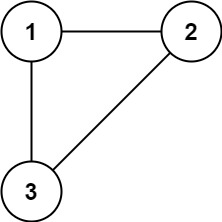
输入: edges = [[1,2],[1,3],[2,3]]
输出: [2,3]
示例 2:
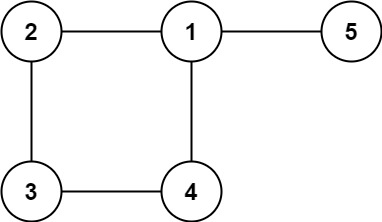
输入: edges = [[1,2],[2,3],[3,4],[1,4],[1,5]]
输出: [1,4]
提示:
n == edges.length3 <= n <= 1000edges[i].length == 21 <= ai < bi <= edges.lengthai != biedges中无重复元素- 给定的图是连通的
注意:本题与主站 684 题相同: https://leetcode.cn/problems/redundant-connection/
class Solution:
    def findRedundantConnection(self, edges: List[List[int]]) -> List[int]:
        def find(x):
            if p[x] != x:
                p[x] = find(p[x])
            return p[x]

        p = list(range(1010))
        for a, b in edges:
            if find(a) == find(b):
                return [a, b]
            p[find(a)] = find(b)
return []class Solution {
private int[] p;
public int[] findRedundantConnection(int[][] edges) {
p = new int[1010];
for (int i = 0; i < p.length; ++i) {
p[i] = i;
}
for (int[] e : edges) {
int a = e[0], b = e[1];
if (find(a) == find(b)) {
return e;
}
p[find(a)] = find(b);
}
return null;
}
private int find(int x) {
if (p[x] != x) {
p[x] = find(p[x]);
}
return p[x];
}
}class Solution {
public:
vector<int> p;
vector<int> findRedundantConnection(vector<vector<int>>& edges) {
p.resize(1010);
for (int i = 0; i < p.size(); ++i) p[i] = i;
for (auto& e : edges) {
int a = e[0], b = e[1];
if (find(a) == find(b)) return e;
p[find(a)] = find(b);
}
return {};
}
int find(int x) {
if (p[x] != x) p[x] = find(p[x]);
return p[x];
}
};func findRedundantConnection(edges [][]int) []int {
p := make([]int, 1010)
for i := range p {
p[i] = i
}
var find func(x int) int
find = func(x int) int {
if p[x] != x {
p[x] = find(p[x])
}
return p[x]
}
for _, e := range edges {
a, b := e[0], e[1]
if find(a) == find(b) {
return []int{a, b}
}
p[find(a)] = find(b)
}
return []int{}
}