| slug | 174-designing-memcached | |||
|---|---|---|---|---|
| id | 174-designing-memcached | |||
| title | Designing Memcached or an in-memory KV store | |||
| date | 2019-10-03 22:04 | |||
| comments | true | |||
| tags |
|
|||
| description | Memcached = rich client + distributed servers + hash table + LRU. It features a simple server and pushes complexity to the client) and hence reliable and easy to deploy. | |||
| references |
- High-performance, distributed key-value store
- Why distributed?
- Answer: to hold a larger size of data <img style={{ width: 200 }} src="https://res.cloudinary.com/dohtidfqh/image/upload/v1569196539/web-guiguio/memcached2.png" />
- For in-memory storage of small data objects
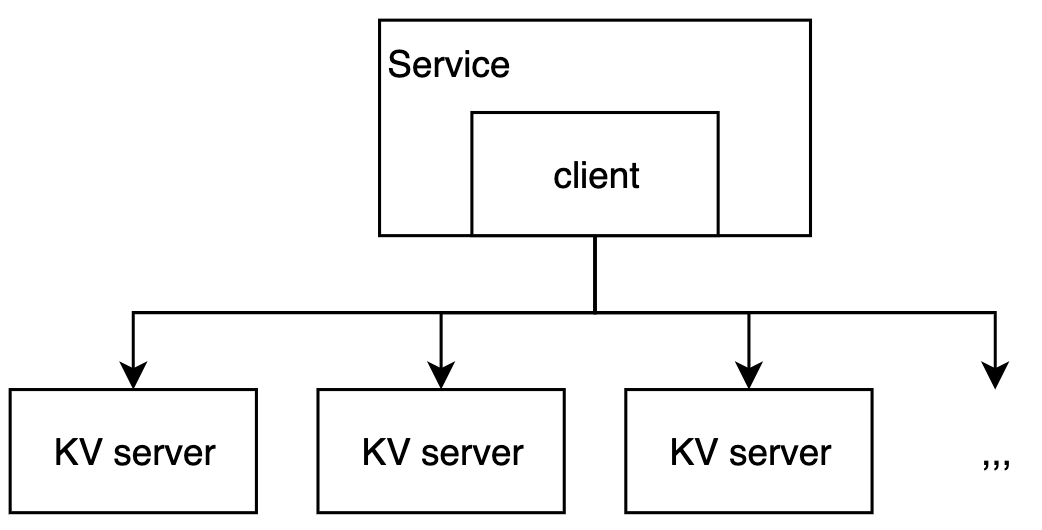
- Simple server (pushing complexity to the client) and hence reliable and easy to deploy
Big Picture: Client-server
<img style={{ width: 256 }} src="https://res.cloudinary.com/dohtidfqh/image/upload/v1569196539/web-guiguio/memcached1.png" />
- client
- given a list of Memcached servers
- chooses a server based on the key
- server
- store KVs into the internal hash table
- LRU eviction
The Key-value server consists of a fixed-size hash table + single-threaded handler + coarse locking
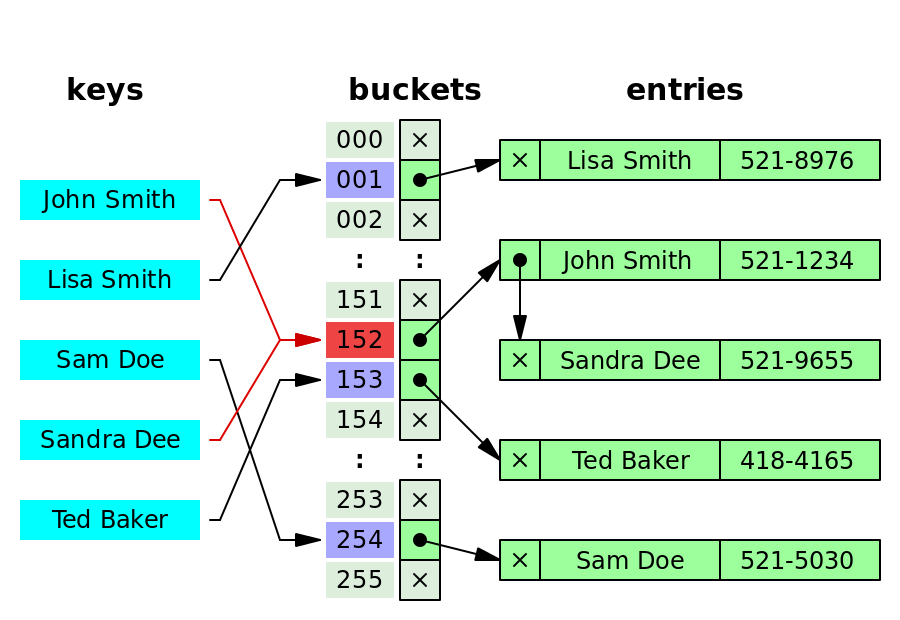

How to handle collisions? Mostly three ways to resolve:
- Separate chaining: the collided bucket chains a list of entries with the same index, and you can always append the newly collided key-value pair to the list.
- open addressing: if there is a collision, go to the next index until finding an available bucket.
- dynamic resizing: resize the hash table and allocate more spaces; hence, collisions will happen less frequently.
See Data Partition and Routing
See Key value cache