Welcome to xlnscpp Discussions! #1

Replies: 21 comments 34 replies

-
|
I'm Arya Gupta, a pre-final year student at JIIT Noida. I'm passionate about deep learning, numerical computing, and system optimization. Excited to be part of this community and looking forward to learning from everyone! |
Beta Was this translation helpful? Give feedback.

-
|
@pradeeban , I wanted to know if we have to submit Code Challenges somewhere or just include them with the proposal? |
Beta Was this translation helpful? Give feedback.

-
|
@pybashc A GitHub contribution/gist followed by its link incorporated in the proposal works best. |
Beta Was this translation helpful? Give feedback.
-
|
@pradeeban Thank you for your response. I will make an effort to contribute if possible and will also begin working on the proposal. If feasible, I would greatly appreciate it if you could review the proposal once it is ready |
Beta Was this translation helpful? Give feedback.
-
|
of course, you can email complete proposal drafts. But avoid sending those drafts too early (i.e., incomplete). |
Beta Was this translation helpful? Give feedback.
-
|
Thankyou |
Beta Was this translation helpful? Give feedback.

-
|
Hello @pradeeban @markgarnold , I have completed the challenges for this project. Now, I was trying to understand the structure of ggml. It has various objects like ggml_context, which handles the context of ggml operations, and ggml_backend_buffer, which manages the buffer for ggml backend operations, and many more. These objects (not objects exactly) are created considering standard datatypes like float, char, etc. Am i thinking in correct direction ?? |
Beta Was this translation helpful? Give feedback.

-
|
Hi @haarit19058 . Your understanding is roughly correct. You say "we need to configure the objects of ggml, which use lns datatype, and introduce overloaded operation". I am not sure what you mean by that. I hope you mean: the methods of ggml that receive and return float (or other existing type) data and that operate internally with float data get modified to be methods that receive and return the same type (typically float) data, but now operate internally with the overloaded operations of xlns16_float. You might have meant to modify ggml to create objects and operate directly on xlns16_float. This would be a very difficult project, and not what is intended. |
Beta Was this translation helpful? Give feedback.
-
|
I wanted to say the same but could not phrase properly. Thanks @markgarnold Here is what i plan to to :
@markgarnold could you please provide some suggestions on what should be done ... |
Beta Was this translation helpful? Give feedback.
-
|
@haarit19058 you have the basic idea. The details of what should be done will be part of your proposal. You may email me a draft of your proposal if you wish. |
Beta Was this translation helpful? Give feedback.
-
|
@markgarnold I have been digging through the code base of ggml and here are some of the findings: Suppose we want to add two tensors, this is what we do
How ggml do it at backend :
We will change this function to use lns internally. But this will involve lot many conversions from float to lns for a llm model. We need to optimize this. Again, is this the correct direction of thought process ?? |
Beta Was this translation helpful? Give feedback.
-
|
@haarit19058 You have identified the correct approach. There will be a forked copy of ggml in which you will change many instances of things like: inline static void ggml_vec_add_f32 (const int n, float * z, const float * x, const float * y) { for (int i = 0; i < n; ++i) z[i] = x[i] + y[i]; } to" inline static void ggml_vec_add_f32 (const int n, float * z, const float * x, const float * y) Note the names of the conversion functions between the class xlns16_float and float have a "" in them: xlns16_2float and float2xlns16 sorry if that is confusing. The overhead of back and forth conversions could only be avoided by keeping a shadow copy of the LNS values, which would be a huge memory overhead for an LLM. Better to accept the slowdown of conversion. Note float2xlns16_ keeps cached copies of previously converted float values, which might reduce the time involved. |
Beta Was this translation helpful? Give feedback.
-
|
I meant have an underline in them (which github took as markdown). The confusion is there are convert functions operating on the xlns (integer) representations, but you will want the class conversion functions that have the underline. Easy to remember because the class (xlns16_float) has an underline in it. |
Beta Was this translation helpful? Give feedback.
-
|
It looks I made a few typos and I reversed the lines after the ifdef, but this is an idea of what needs to be done. You could nest two ifdefs, which would allow you to choose either 16- or 32-bit LNS, by simply including xlns16.cpp or xlns32.cpp on the compilation command line: #ifdef xlns16 |
Beta Was this translation helpful? Give feedback.
-
|
#endif |
Beta Was this translation helpful? Give feedback.

-
|
Hmm, understood sir, I will find the functions that needs to be changed. |
Beta Was this translation helpful? Give feedback.
-
Vectors functions / tensorsggml_vec_xl_u8x2 Quantization functionsascendc_quantize_f16_to_q4_0 These functions need to be changed. There are a lot... |
Beta Was this translation helpful? Give feedback.
-
void dequantize_row_q4_0(const block_q4_0 * GGML_RESTRICT x, float * GGML_RESTRICT y, int64_t k) {
    static const int qk = QK4_0;

    assert(k % qk == 0);

    const int nb = k / qk;

    for (int i = 0; i < nb; i++) {
        const float d = GGML_FP16_TO_FP32(x[i].d);

        for (int j = 0; j < qk/2; ++j) {
            const int x0 = (x[i].qs[j] & 0x0F) - 8;
            const int x1 = (x[i].qs[j] >>   4) - 8;

            y[i*qk + j + 0   ] = x0*d;
            y[i*qk + j + qk/2] = x1*d;
        }
    }
}
for these quantization and dequantization functions what am i supposed to do ?? Like use xlns16 for that ?? |
Beta Was this translation helpful? Give feedback.
-
|
I now understood the scale of the project. I have to change ggml code a lot to get desired results. |
Beta Was this translation helpful? Give feedback.
-
|
The project is not quite as big as the list implies. At least some of the quantization and dequantization functions do not have to change. For example, the dequantize_row_q4_0 example you gave converts a sequence of 4-bit elements (scaled by d, a 16-bit float) to normal 32-bit float for some future operation with float. There is not actual computation in dequantize_row_q4_0, so there is nothing to be done with xlns16. I think a lot of those functions listed for quantization and dequantization will be like this, but you will have to decide on a case-by-case basis. For example, what about dequantize_mul_mat_vec_q4_k (and similar)? That seems to imply some computation takes place (which we would like done using xlns16.cpp) |
Beta Was this translation helpful? Give feedback.
-
|
@markgarnold I have completed preparing my proposal. Could you kindly review it? I will be sending it to markgarnold@yahoo.com, as I believe this is the correct email address. Please let me know if otherwise. |
Beta Was this translation helpful? Give feedback.
-
|
@haarit19058 and also make sure to submit to GSoC Portal. You can submit first and keep updating there until the deadline. Sometimes you may not hear from the mentors. We don't send feedback such as "Received your proposal. Looks good." |
Beta Was this translation helpful? Give feedback.
-
|
Thank you for the clarification, @pradeeban. I will ensure that my proposal is submitted to the GSoC portal and keep updating it until the deadline. |
Beta Was this translation helpful? Give feedback.
-
|
The GGML library includes support for various backends, such as CUDA, OpenCL, and Vulkan. For this project, do we need to implement the LNS backend (xlns32/xlns16) for all these modules, or should we focus on CPU only? |
Beta Was this translation helpful? Give feedback.

-
|
My view is that CPU is the useful first step, and that addressing multiple backend options will be time consuming, challenging, and repetitive. |
Beta Was this translation helpful? Give feedback.
-
|
FYI @echester I am working on a version that can be compiled on CUDA device. The "xlns16_alt" and "xlns32_alt" algorithms for addition are a step on that road. The GSoC people like @haarit19058 should focus on CPU using the existing xlns16.cpp. Hopefully there will be a version that can run on CUDA soon |
Beta Was this translation helpful? Give feedback.
-
|
Ok great - I'm relieved I'm not way off beam here then... |
Beta Was this translation helpful? Give feedback.
-
|
Is this project considered medium-scaled or large-scaled? What should I write in gsoc proposal ?? |
Beta Was this translation helpful? Give feedback.
-
|
This question is answered here. https://github.com/uaanchorage/GSoC/blob/main/CONTRIBUTOR-GUIDE.md The hours -> length mapping is common to all the GSoC organizations. |
Beta Was this translation helpful? Give feedback.

-
|
I'm Ashwin from CS first year, i came to know about the project pretty late and didn't know we've to link the done code challenges in the proposal application. I didn't put any. What should I do now ? |
Beta Was this translation helpful? Give feedback.

-
|
You can upload the proposal again if you wish.
Ed
…On Tue, 8 Apr 2025, 09:49 Ash, ***@***.***> wrote:
I'm Ashwin from CS first year, i came to know about the project pretty
late and didn't know we've to link the done code challenges in the proposal
application. I didn't put any. What should I do now ?
—
Reply to this email directly, view it on GitHub
<#1 (comment)>,
or unsubscribe
<https://github.com/notifications/unsubscribe-auth/AAYYSO3O5XO3LTVVNB7KGYL2YOEQ7AVCNFSM6AAAAABXCVORECVHI2DSMVQWIX3LMV43URDJONRXK43TNFXW4Q3PNVWWK3TUHMYTENZWGE2TEOI>
.
You are receiving this because you were mentioned.Message ID:
***@***.***>
|
Beta Was this translation helpful? Give feedback.

-
|
Hello @markgarnold @echester I am excited to work on this project!! apart from the attached research papers is there anything we should go through in this regards? |
Beta Was this translation helpful? Give feedback.

-
|
I'm interested in contributing a modern CMake build system to xlnscpp. Goals:
Would this be a valuable contribution? I'm happy to discuss the Looking forward to your thoughts! |
Beta Was this translation helpful? Give feedback.
-
|
This is not what we need |
Beta Was this translation helpful? Give feedback.

-
|
Hi @markgarnold, @pradeeban, @EdChester — I'm Arjun. I submitted the native LNS softmax (#22) and table-backed exp/log (#23) that were merged recently, and have a few more open PRs (layer normalization, table-backed exp2/log2, weight quantization). I'm interested in the GSoC project on LNS support for LLMs and have been looking at the ggml backend architecture to understand how the integration would work. Are there specific areas you'd like contributors to focus on? |
Beta Was this translation helpful? Give feedback.
-
|
@ArjunDeshwal , ggml is quite complex. LNS will be a backend tool. This is a proof of concept that xlns16 can do the arithmetic and still have llama.cpp run an LLM. Think of how you plan to modify ggml to use xlnscpp. |
Beta Was this translation helpful? Give feedback.

-
|
@ArjunDeshwal : a further clarification. This project was not selected by Google last year. There were proposals on how to do it, but not quite good enough. For example, see haarit19058 list of functions in this thread. I am not saying that is the correct answer, but it illustrates the extent of the changes needed to ggml to make this work. Since it was posted here (open source) you are free to use this as a starting point, but there are other issues to consider. For example, will you make a clone of ggml and modify that? Or something else? |
Beta Was this translation helpful? Give feedback.

-
|
Hi @markgarnold, I've been studying how ggml dispatches operations internally traced the path from ggml_add through the compute graph down to ggml_vec_add_f32 in ggml-cpu.c. I also looked at how the quantized dot products work in functions like ggml_vec_dot_q4_0_q8_0.
|
Beta Was this translation helpful? Give feedback.
-
|
@ArjunDeshwal (also @Ayush3941 and @naman9271 who are considering related ideas): Here are my thoughts on the two technical questions asked:
Also mentioned were quantized dot products. Low-width quantization is used in LLMs for parameter compression; ggml usually converts these to FP32. If that is the automatic default behavior, it is fine to then convert FP32 to xlns16, perform the computation, convert back to FP32 (and let ggml/llama take it from there) |
Beta Was this translation helpful? Give feedback.
-
|
@markgarnold @akrentz6 I've mailed my proposal drafts to boht of you on your respective mails. Let me know what you think about it |
Beta Was this translation helpful? Give feedback.

-
|
Hii @markgarnold reading whole thread i see that the reasons of your concern about this project not getting selected last year is very understandable the key aspects most applicants are missing is treating this as any regular GSOC project where you have to contribute according to set guidelines to get selected but this one is different instead of contributing or adding new feature we have to make a new technical perspective and implement it ,not as hard as making things out of scratch but realigning the way they work at the core my current approach (sharing in case it’s useful): my perspective based on experience with large codebases like LLVM let me know what you all think, since there is a month left before deadline lets give our best |
Beta Was this translation helpful? Give feedback.
-
|
I appreciate the PRs and comments submitted (including those from @ArjunDeshwal @Ayush3941 and @naman9271 ), but it is important to understand the goal of this project: to see whether 16-bit LNS can work in llama (by modifying ggml to use xlns16). This will be a proof of concept (probably a lot slower than FP). The mentors for this project are @akrentz6 (who created xlnstorch last summer during GSoC2025) and me. (Ed is no longer able to devote time to this). @pradeeban is the Alaska org person who makes sure we comply with all GSoC rules. At most one contributor will be selected by Google to receive a stipend during the coding period. As noted, this project is a bit different than those for other orgs. This is an open-source project; sharing your code and insights with your fellow contributors is a good thing. On the other hand, only one contributor will be selected to implement the ggml/xlns16 project. This will be based on the technical quality of the proposal you submit. If there are no "good" proposals, GSoC Alaska will choose not to fund this project. Since @akrentz6 was selected last year, he may be able give some hints on how to conceive and write a good proposal. Do not use AI to write your proposal. I am willing to give feedback on your proposal (sent privately to my email) when it is nearing completion. Check with @akrentz6 if he is also willing to do this--I don't know if he has the time. I will not write your proposal for you. |
Beta Was this translation helpful? Give feedback.

-
|
Hi @markgarnold and @akrentz6, I am Vedant from IIT Gandhinagar. I really liked xlns support for llama.cpp project idea for GSoC 2026, so I have been working on it for about a week now. I went through the whole thread and identified the core objective: to build an XLNS backend that performs matrix multiplication using xlns16 Is this correct approach? I will include about adding other functions in proposal. By referring to other backend implementations such as I tested it using a very small model, More implementation and testing details can be found here: https://github.com/Ninjacoder-vedant/llama.cpp/blob/xlns-backend/docs/backend/XLNS.md. You can clone the repo’s |
Beta Was this translation helpful? Give feedback.

-
|
Okay, thanks for feedback. I'll try to do that |
Beta Was this translation helpful? Give feedback.
-
|
@markgarnold and @akrentz6, I have two questions:
Let me know what you think |
Beta Was this translation helpful? Give feedback.
-
|
Regarding the questions from@Ninjacoder-vedant :
@akrentz6 may have additional thoughts. |
Beta Was this translation helpful? Give feedback.
-
|
An additional thought: I am not expecting an xlns32 implementation in ggml. But if that were being done, then the answer for the question of caching would be different. But that is not what this project should consider. So, no to caching. |
Beta Was this translation helpful? Give feedback.
-
|
@markgarnold Okay, got your point! I think then it's similar to what I have implemented here: matmul_fun. According to what @akrentz6 said, it's a naive implementation in which I am converting the output to f32 every time, and then the next layer converts it back to xlns16. Instead, what I think we can do is convert the input f32 token embeddings into xlns16 once, and then each operation after this will have at least one tensor (the activations) in xlns16. The other tensor (the weights in For the operations, these are the ones I think we would need to implement in xlns16: RoPE (Rotary Positional Encodings), RMS_NORM, ADD, SILU, MUL, MUL_MAT, and possibly a few others depending on the model we want to run. These are based on the requirements of the llama3.2-1B model. Is this the correct direction? Another question I have:
|
Beta Was this translation helpful? Give feedback.

-
|
Hi all, I've attached my proposal from last year's xlnstorch project for reference. |
Beta Was this translation helpful? Give feedback.
-
|
Hi Vedant,
I do not see your proposal on the GSoC portal. The deadline is 31 March. You are allowed to submit revisions up to that time. The portal may become slow near the deadline, so it is wise to submit early.
On Wednesday, March 18, 2026 at 12:48:33 AM EDT, Vedant Acharya ***@***.***> wrote:
@markgarnold Okay, got your point! I think then it's similar to what I have implemented here: matmul_fun. According to what @akrentz6 said, it's a naive implementation in which I am converting the output to f32 every time, and then the next layer converts it back to xlns16.
Instead, what I think we can do is convert the input f32 token embeddings into xlns16 once, and then each operation after this will have at least one tensor (the activations) in xlns16. The other tensor (the weights in mat_mul) can stay in a quantized format. For that, we would need to implement dynamic dequantization functions that convert the most popular quantized formats into xlns16. Then at the output layer we can convert activations (logits) back to f32.
For the operations, these are the ones I think we would need to implement in xlns16: RoPE (Rotary Positional Encodings), RMS_NORM, ADD, SILU, MUL, MUL_MAT, and possibly a few others depending on the model we want to run. These are based on the requirements of the llama3.2-1B model. Is this the correct direction?
Another question I have:
- Llama3.2-1B supports flash attention, for which there is an op in ggml called FLASH_ATTN_EXT. It seems to be a fairly complex algorithm to implement in xlns16. I think normal attention should work fine for the GSoC PoC, which would just be Query–Key matmul followed by softmax. So, should we implement FLASH_ATTN_EXT in xlns16?
—
Reply to this email directly, view it on GitHub, or unsubscribe.
You are receiving this because you were mentioned.Message ID: ***@***.***>
|
Beta Was this translation helpful? Give feedback.
-
|
Yes, I am working on it. I will submit my first version within 2-3 hours. Once I submit, please kindly review Project goals and project timeline section, and provide your valuable feedback. |
Beta Was this translation helpful? Give feedback.

-
|
Hi everyone, I’m Krishna, a final year student currently focusing on SLM quantization. I’ve been following this project closely because replacing floats at the compute level is exactly the kind of on-device optimization I've been researching for smaller models. I’ve already Completed the code challenges (running the xlns16/32 tests and the ggml FP32 matmul examples). I also put together a three-way comparison between FP32 and the LNS variants just to see where the precision trade-offs are. I’m looking forward to the technical discussions here, especially on picking the right vec functions to modify without messing with the core stability code Challenge Repo: https://github.com/krishnamurthi-ramesh/Gsoc-xlnscpp-CodeChallenge |

Beta Was this translation helpful? Give feedback.
-
|
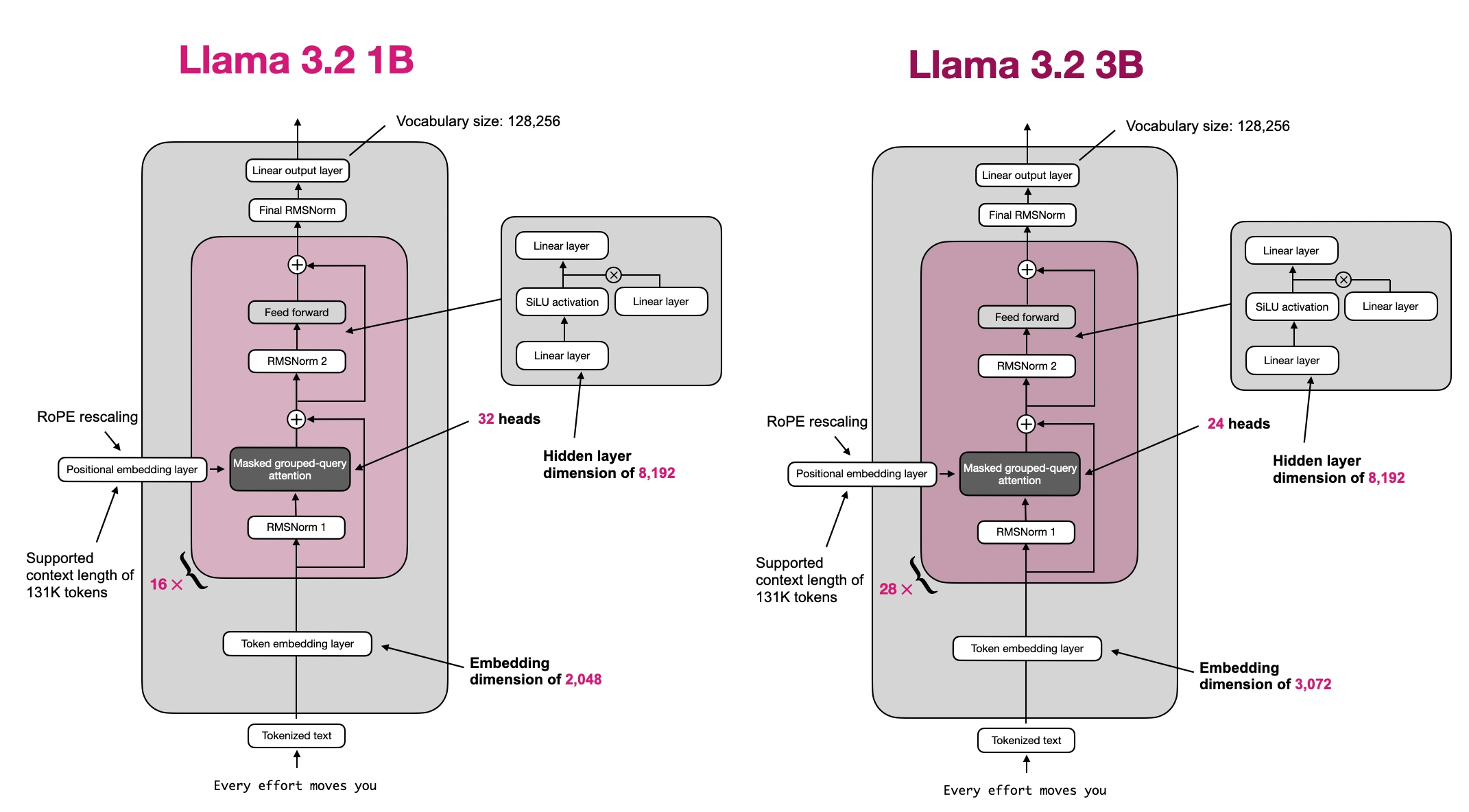
I wanted to follow up on my introduction with some concrete progress. I've spent the last 24 hours focusing on the #ifdef fork strategy you described for ggml. I've implemented a proof-of-concept fork where I've patched the core vectorized functions in vec.h and vec.cpp. Specifically: ggml_vec_dot_f32: I've implemented this with a persistent xlns16_float accumulator. It performs dynamic conversion (float2xlns16_) for the inputs, executes exact LNS multiplication, and uses table-referenced addition, only converting back to float at the very end of the dot product. I believe this core-patch approach is a good way to simulate LNS for llama.cpp without the memory overhead of shadow tensors. Looking forward to your feedback. |

Beta Was this translation helpful? Give feedback.


Uh oh!
There was an error while loading. Please reload this page.
-
👋 Welcome!
We’re using Discussions as a place to connect with other members of our community. We hope that you:
build together 💪.
To get started, comment below with an introduction of yourself and tell us about what you do with this community.
Beta Was this translation helpful? Give feedback.
All reactions