💸 Decentralized Lending Application
A decentralized finance (DeFi) lending app built with Solidity, React.js, and JavaScript.
Users can deposit tokens into ERC-4626 vaults, borrow against collateral, and repay loans — with smart contract-enforced time-based liquidations (backend fully implemented, frontend coming soon).
Watch a quick demo of the lending app in action:
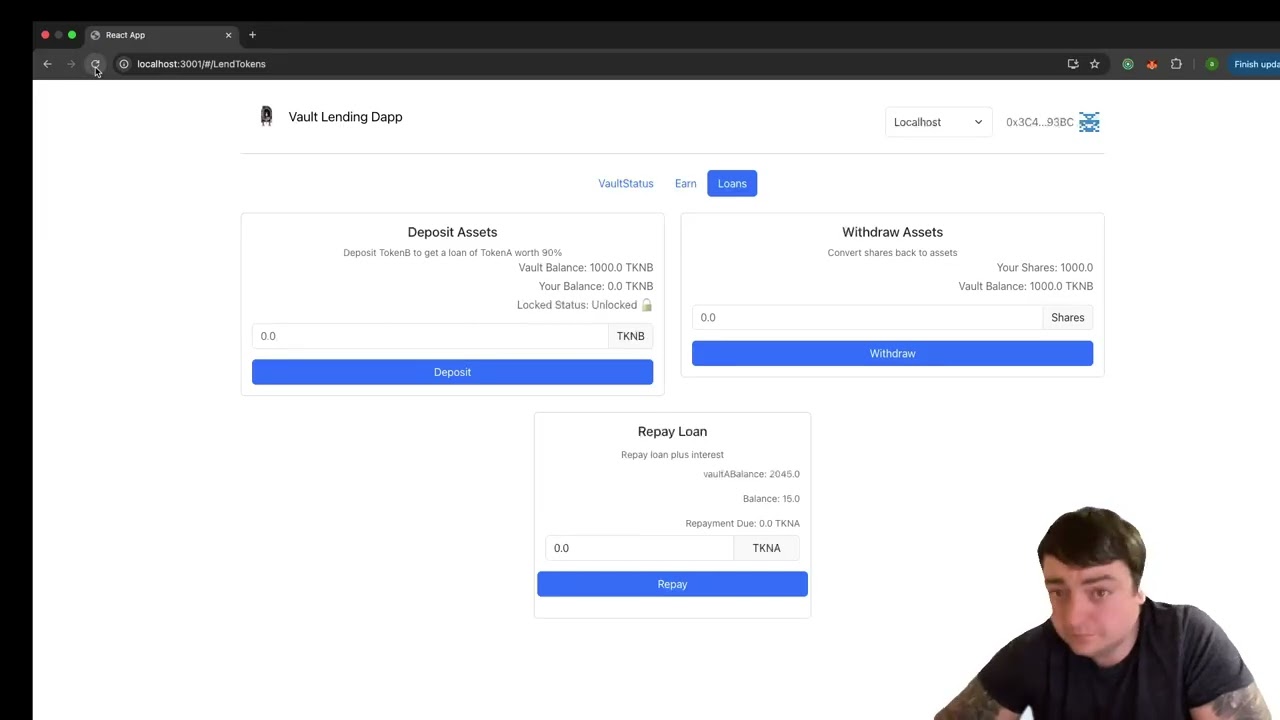
Try the app live at:
👉 https://lendingapp.on-fleek.app/
The website includes a token faucet allowing you to mint test tokens and interact with the vaults without needing any external tokens. Perfect for testing deposits, loans, and repayments in a risk-free environment.
-
Get test tokens
Use the built-in faucet on the website to mint tokens for both Vault A and Vault B. -
Deposit Tokens into Vault A
Earn interest by lending tokens to the pool. -
Borrow Tokens Using Vault B Collateral
Lock your collateral tokens in Vault B and borrow tokens against them. -
Repay Loan Before Expiry
Repay your loan any time before expiry to unlock collateral and avoid liquidation.
-
🏦 Dual ERC-4626 Vaults
- Vault A: Lending vault for deposits and loan issuance
- Vault B: Collateral vault securing borrowers’ assets
-
🎮 Vault Controller Contract
Manages user lock states and performs loan liquidations upon expiry -
🪙 Two ERC-20 Test Tokens
Available from faucet to simulate real-world lending scenarios -
🧨 On-Chain Time-Based Loan Liquidation
Loans are liquidated automatically when overdue -
🖥 Frontend
React.js with Redux for smooth user experience and state management
Loans have a predefined duration. The system enforces liquidation automatically through the following steps:
-
Loan Issuance
When a borrower takes a loan, their collateral is locked in Vault B and the loan start timestamp is recorded. -
Loan Monitoring
The Vault Controller tracks loan timestamps and checks if the loan has expired. -
Time-Based Liquidation
If a loan is not repaid before the expiry:- The borrower’s shares in Vault B are burned.
- Collateral tokens are transferred from Vault B to the Vault Controller contract.
- The borrower’s loan and collateral are effectively liquidated to protect lenders.
-
Repayment Before Expiry
Borrowers can repay their loans at any time before expiry to unlock their collateral and avoid liquidation.
The time-based liquidation logic is fully implemented and enforced on-chain via smart contracts.
However, the frontend currently does not provide a UI for manual or automatic liquidation actions. This feature will be integrated in a future update to improve user experience and transparency.
- Node.js (v16 or above recommended)
- npm or yarn
- Hardhat
- metamask account https://metamask.io/
-
Install dependencies
npm install -
Run smart contract tests npx hardhat test
3 Start local blockchain npx hardhat node
4 Deploy contracts npx hardhat run scripts/deploy.js --network localhost
5 Update config.json Add deployed contract addresses to the config file for the frontend to connect properly.
6 Start frontend npm run start
🛠️ Project Structure /contracts — Solidity contracts for vaults, tokens, and controllers
/scripts — Deployment and utility scripts
/test — Hardhat tests ensuring contract correctness
/frontend — React app with Redux state management
🤝 Contributing Contributions, issues, and feature requests are welcome! Feel free to open an issue or submit a pull request.
📄 License This project is licensed under the MIT License.