



Agent Runtimes is a unified platform for deploying, managing, and interacting with AI agents across multiple protocols and frameworks. It provides both a Python server for hosting agents and React components for seamless integration into web and desktop applications.
Agent Runtimes solves the complexity of deploying AI agents by providing:
-
Protocol Abstraction: One agent, multiple protocols - deploy your agent once and access it through ACP, Vercel AI SDK, AG-UI, MCP-UI, or A2A without changing your code.
-
Framework Flexibility: Write agents using your preferred framework (Pydantic AI, LangChain, Jupyter AI) while maintaining a consistent API.
-
Cloud Runtime Management: Built-in integration with Datalayer Cloud Runtimes for launching and managing compute resources with Zustand-based state management.
-
UI Components: Pre-built React components (ChatBase, ChatSidebar, ChatFloating) that connect to agents and execute tools directly in the browser.
-
Tool Ecosystem: Seamless integration with MCP (Model Context Protocol) tools, custom tools, and built-in utilities for Jupyter notebooks and Lexical documents.
- ACP (Agent Client Protocol): WebSocket-based standard protocol
- Vercel AI SDK: Compatible with Vercel's AI SDK for React/Next.js
- AG-UI: Lightweight web interface (Pydantic AI native)
- MCP-UI: Interactive UI resources protocol with React/Web Components
- A2A: Agent-to-agent communication
- Pydantic AI: Type-safe agents (fully implemented)
- LangChain: Complex workflows (adapter ready)
- Jupyter AI: Notebook integration (adapter ready)
- 🔌 Flexible Architecture: Easy to add new agents and protocols
- 🛠️ Tool Support: MCP, custom tools, built-in utilities
- 📊 Observability: OpenTelemetry integration
- 💾 Persistence: DBOS support for durable execution
- 🔒 Context Optimization: LLM context management
Agent Runtimes consists of three main components:
The backend server that hosts AI agents and handles protocol routing:
- Agent Adapters: Unified interface for Pydantic AI, LangChain, and Jupyter AI
- Protocol Adapters: Convert between different agent protocols (ACP, AG-UI, Vercel AI, etc.)
- FastAPI Server: High-performance async server with automatic API documentation
- Tool Registry: Manages and executes tools from various sources (MCP, custom, built-in)
Pre-built UI components for interacting with agents:
- ChatBase: Core chat interface with customizable styling
- ChatSidebar: Collapsible sidebar for agent interactions
- ChatFloating: Floating chat widget for non-intrusive agent access
- All components support: Frontend tool execution, markdown rendering, code highlighting, and real-time streaming
Cloud runtime lifecycle management with Zustand store:
- Launch & Connect: Create new cloud runtimes or connect to existing ones
- Agent Creation: Automatically create and configure agents on runtimes
- State Management: Track runtime status, agent connections, and errors
- Hooks: React hooks for easy integration (
useAgentRuntime,useRuntimeStore)
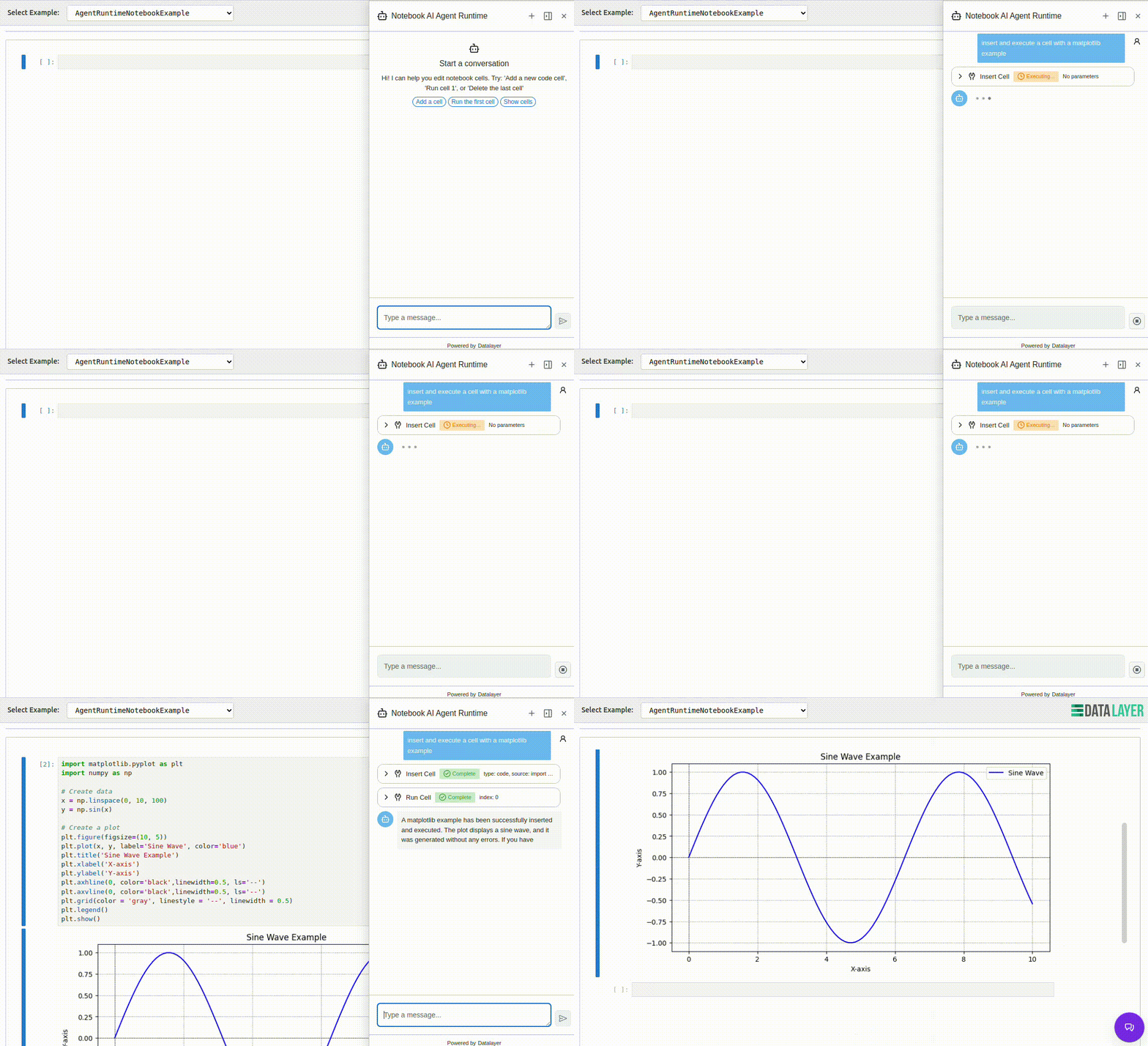
Add an AI agent to Jupyter notebooks that can:
- Execute cells, insert code, and modify notebook content
- Explain code and data analysis
- Debug errors and suggest improvements
import { NotebookAgentsRuntime } from '@datalayer/agent-runtimes';

<NotebookAgentsRuntime
  notebookId={notebookId}
  environmentName="python-simple"
  runtimeName={runtimeName}
  serviceManager={serviceManager}
/>Integrate AI into Lexical-based document editors:
- Insert headings, lists, code blocks, and formatted text
- Summarize content and proofread text
- Generate ideas and help with writing
import { DocumentAgentRuntime } from '@datalayer/agent-runtimes';

<DocumentAgentRuntime
  documentId={documentId}
  environmentName="python-simple"
  runtimeName={runtimeName}
  serviceManager={serviceManager}
/>Deploy your own Pydantic AI agent with custom tools:
from agent_runtimes import AgentRuntimesApp
from pydantic_ai import Agent

# Create your agent
agent = Agent(
    model='anthropic:claude-sonnet-4-5',
    system_prompt='You are a helpful assistant.',
)

# Launch the server
app = AgentRuntimesApp()
app.add_agent(agent, name='my-agent', transport='ag-ui')
app.run(port=8000)Run the Codemode + MCP example UI:
cd src/ai/agent-runtimes
EXAMPLE=AgentCodemodeMcpExample npm run devAgent Runtimes supports multiple protocols for agent communication:
- AG-UI: Lightweight protocol for web UIs (POST-based, Pydantic AI native)
- ACP: WebSocket-based Agent Client Protocol for real-time interaction
- Vercel AI SDK: Compatible with Vercel's AI SDK streaming
- MCP-UI: Model Context Protocol with UI resources
- A2A: Agent-to-agent communication protocol
Tools extend agent capabilities by allowing them to perform actions:
- Frontend Tools: Execute in the browser (notebook editing, document manipulation)
- MCP Tools: Tools from Model Context Protocol servers
- Custom Tools: Your own Python functions decorated with tool metadata
- Built-in Tools: File operations, web search, code execution
- Code Mode: Tool discovery includes
output_schemaandinput_examplesfor reliable calls; code execution returnsstdout/stderrand a summarizedresult.
Cloud runtimes provide compute resources for agents:
import { useAgentRuntime } from '@datalayer/agent-runtimes/lib/runtime';

const { isReady, endpoint, tools, launchRuntime } = useAgentRuntime({
  autoCreateAgent: true,
  agentConfig: {
    model: 'anthropic:claude-sonnet-4-5',
    systemPrompt: 'You are a helpful AI assistant.',
  },
});

// Launch a new runtime
await launchRuntime({
  environmentName: 'python-simple',
  creditsLimit: 100,
  type: 'notebook',
});