Home English
Welcome to the GEOFlow Wiki.
GEOFlow is an open-source system for GEO content engineering, AI-search-ready publishing, multi-site distribution, and automated content operations. It is not just a CMS and not just an AI writing tool. It is closer to a content operating system that connects models, Enterprise Knowledge, materials, tasks, review, publishing, analytics, GEOFlow Agent / WordPress REST / Generic HTTP API distribution, and Skill / CLI / API collaboration into one workflow.
Current public version: v2.1.0, released on 2026-06-26. See the Changelog.
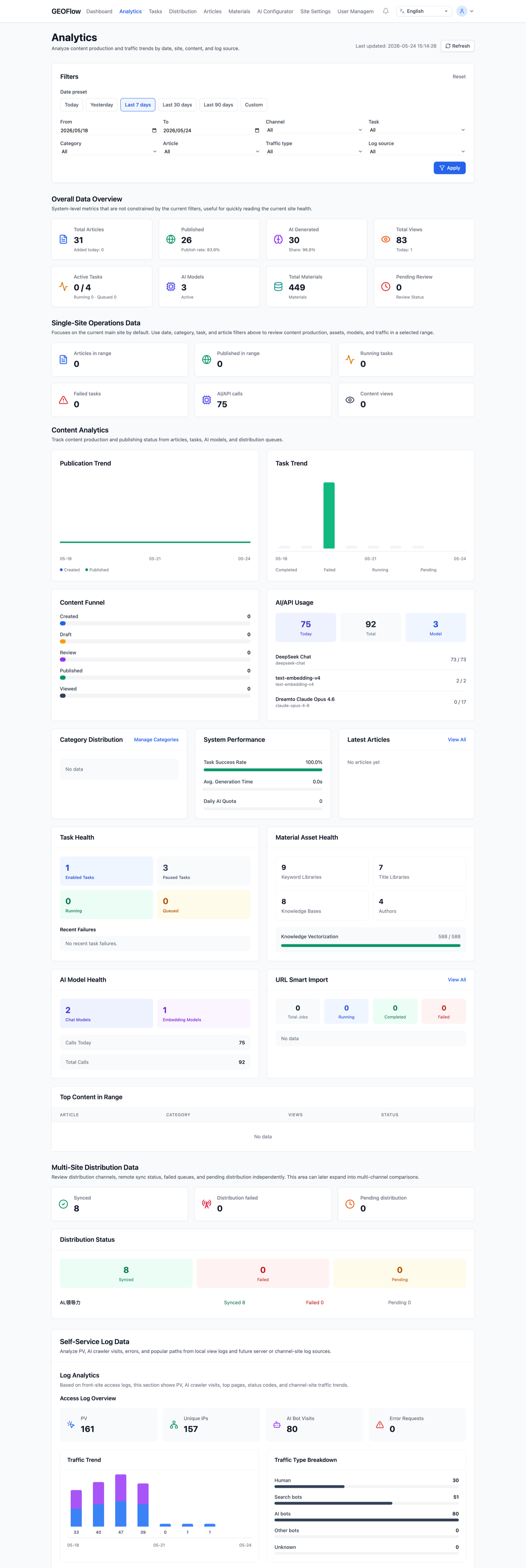 Analytics |
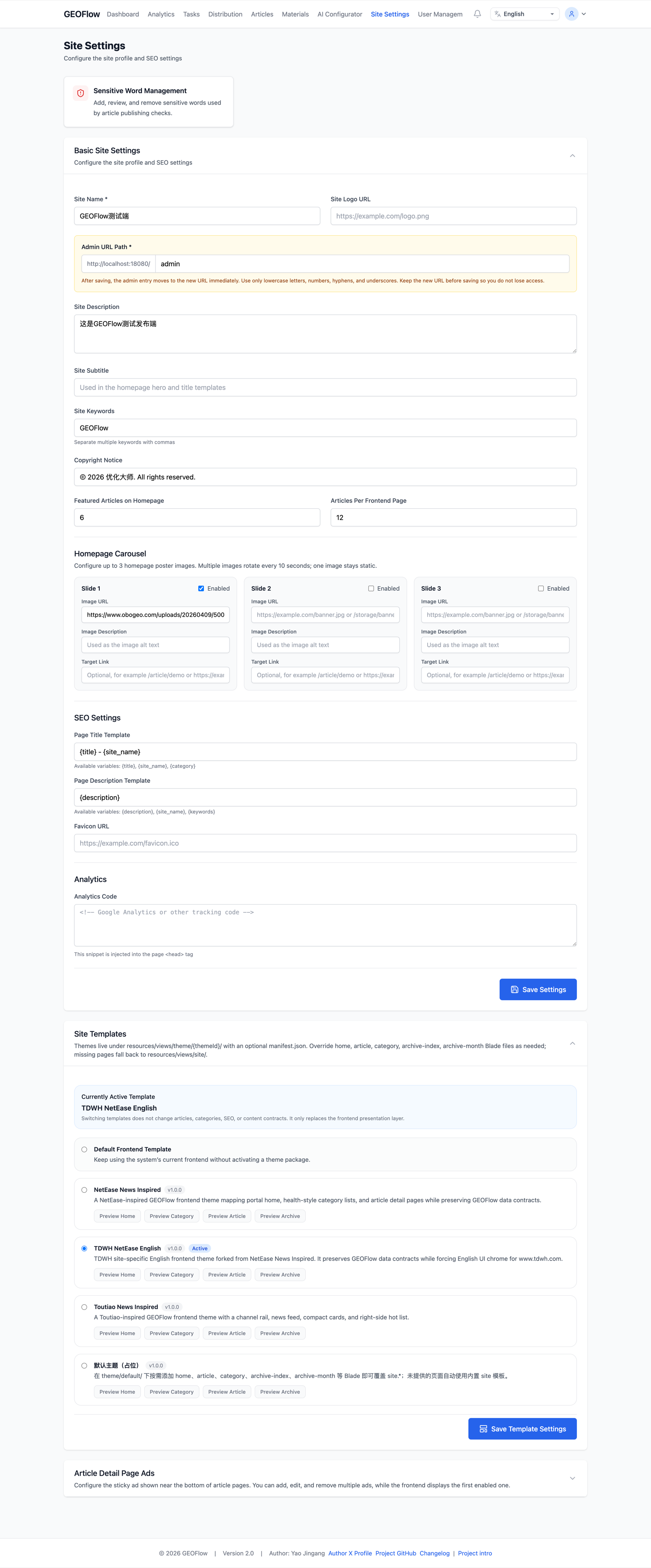 Site Settings |
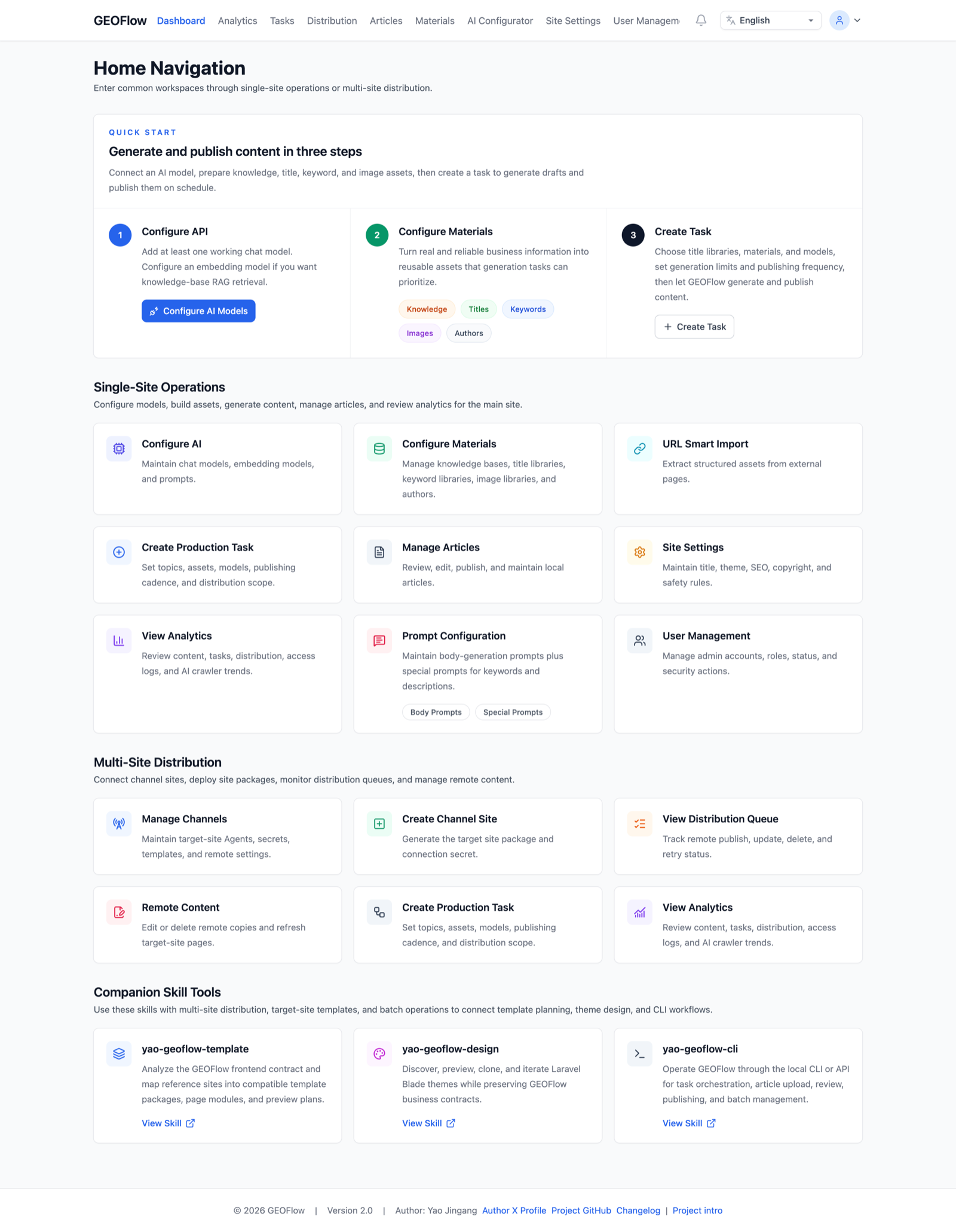 Admin Dashboard |
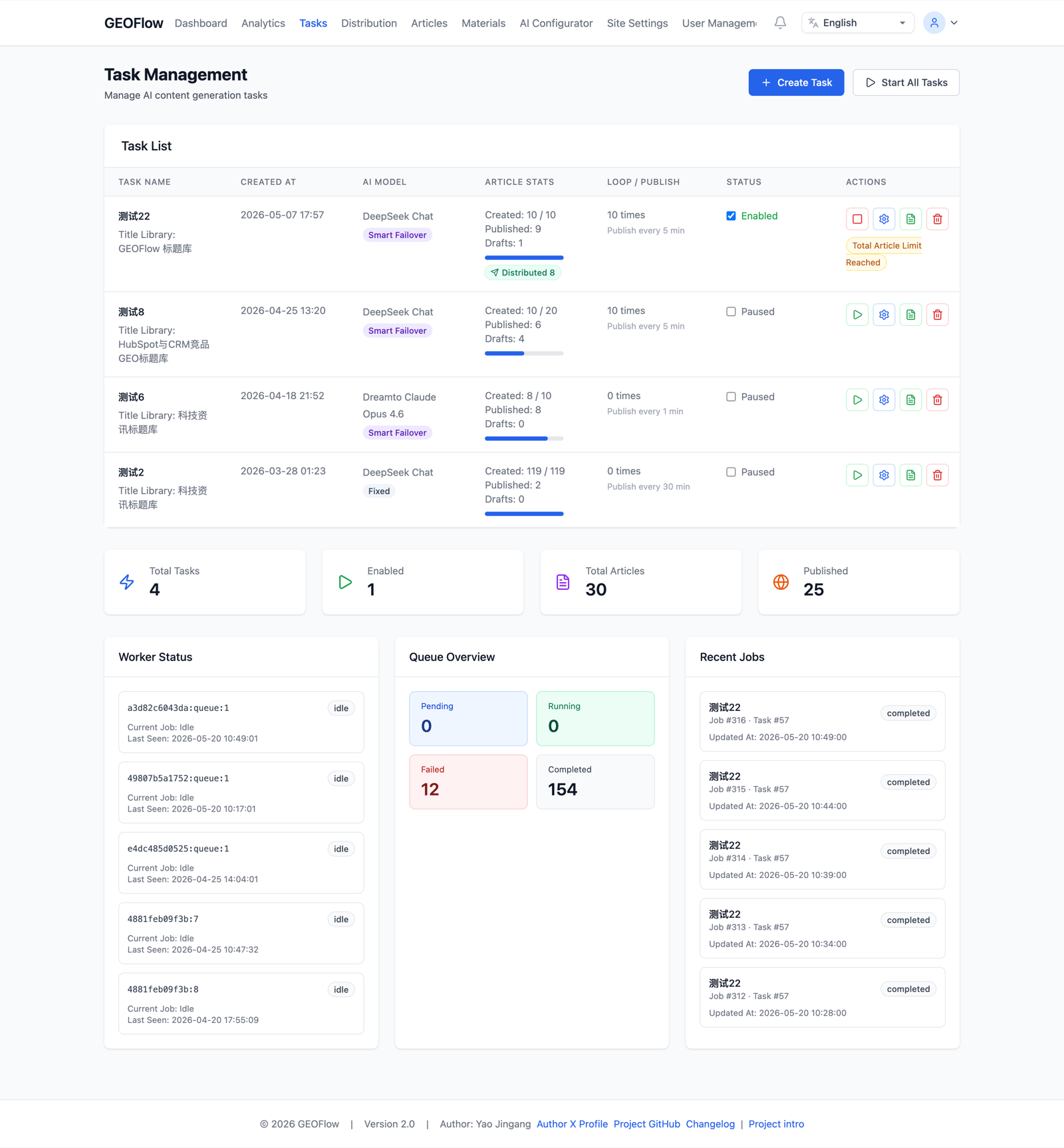 Task Management |
||
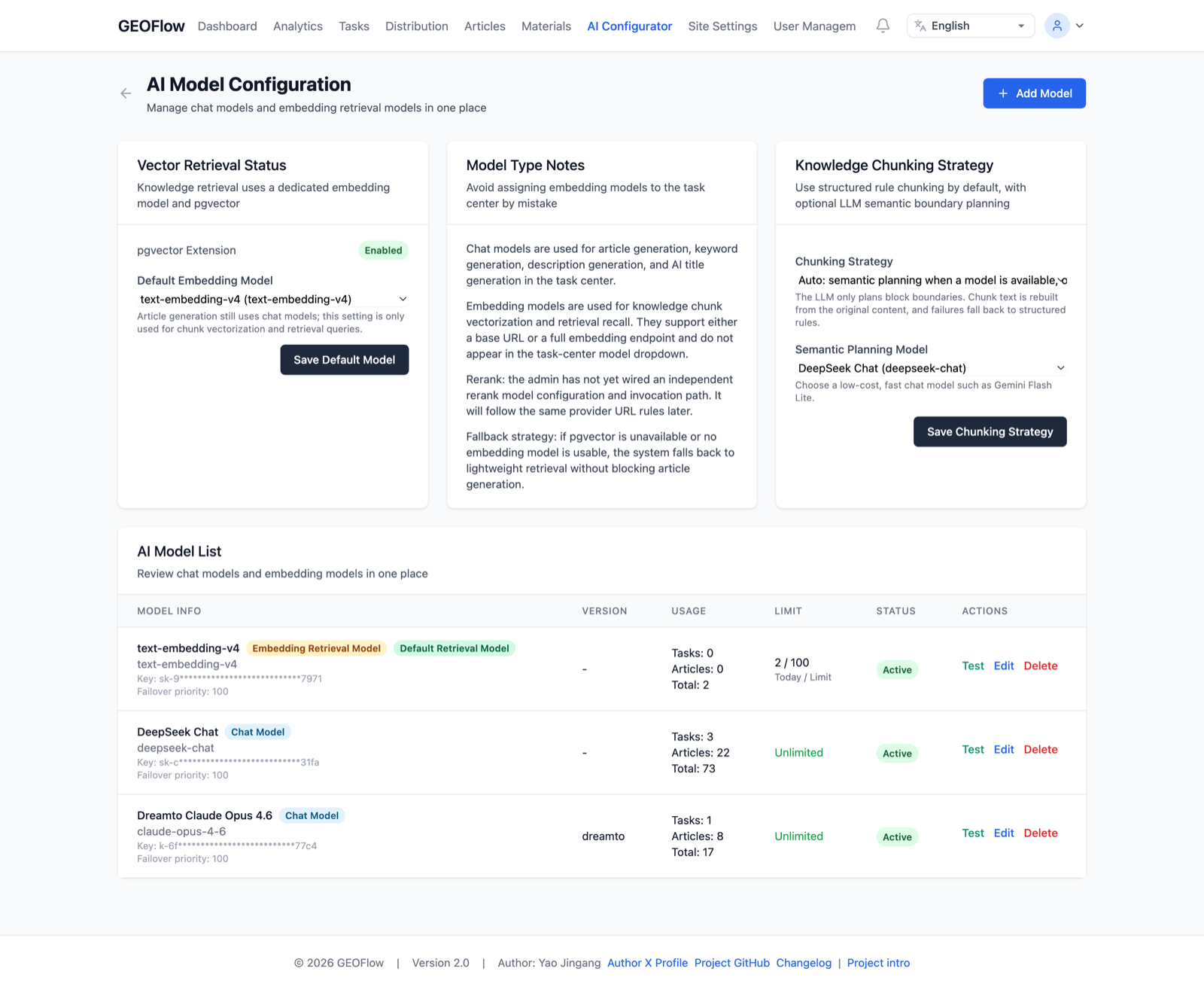 AI Model Configuration |
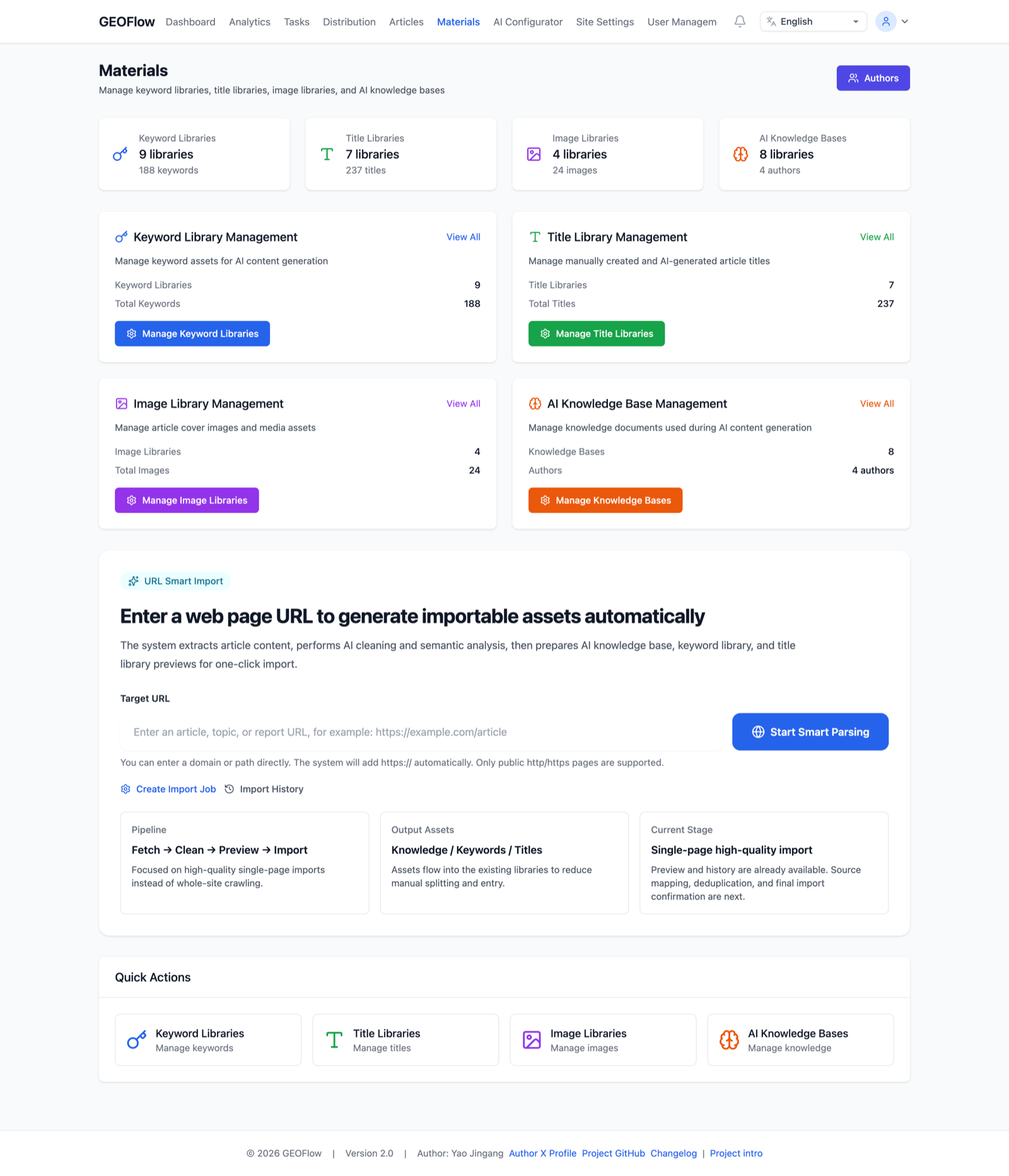 Materials |
This wiki is meant to answer six questions:
- What GEOFlow actually is
- Which teams and scenarios it fits
- What its methodology is
- What its content boundaries and operating principles are
- How it should be deployed, distributed, and adopted
- Where it is heading next
Recommended reading order:
- What Is GEOFlow
- GEOFlow Methodology
- Principles and Content Boundaries
- Use Cases
- Deployment Patterns by Scenario
- Core Capabilities
- Model Setup Guide
- AI Knowledge Base Tutorial
- Knowledge Chunking and RAG
- Distribution Management and Target Sites
- Analytics and Logs
- Theme and Template Workflow
- Changelog
- Recommended Adoption Path
- Skill / CLI / API Ecosystem
- Roadmap
- Author and Project
- Getting Started
- FAQ
- Deployment Guide
- Deployment Scripts Guide
- Deployment Checklist
If there is one line that best describes GEOFlow:
It turns knowledge assets, AI content generation, review, publishing, analytics, multi-site distribution, and automation into an engineered operating workflow.
Its current strengths include:
- Multi-model integration with OpenAI-compatible providers and native Gemini endpoints
- chat / embedding model types, provider URL adaptation, and connection tests
- Centralized material libraries
- author libraries, semantic knowledge chunk planning, Enterprise Knowledge draft generation, and vectorization status preview
- Task scheduling, queueing, and worker execution
- Draft, review, and publish workflows, including local / channel / local-plus-channel publication scope
- Search- and AI-citation-ready frontend output
- GFM Markdown article rendering and legacy image path normalization
- Theme preview, activation, live editing, and theme packages
- Distribution Management, GEOFlow Agent target-site packages, WordPress REST channels, and Generic HTTP API channels
- Static homepages, article pages, sitemap,
llms.txt, and TXT map generation - Analytics for system overview, single-site operations, multi-site distribution, access logs, and AI crawlers
- admin i18n, GitHub version update reminders, and admin account management
- Skill / CLI / API collaboration
The system is meant to amplify the value of real knowledge assets, not to amplify noise.