


A lightweight, cross-platform Python TUI (Terminal User Interface) library. Build keyboard-driven terminal apps with widgets, focus management, mouse support, and smooth cursor blinking — all rendered through raw VT sequences. Runs on Windows (Console API) and POSIX (Linux/macOS via termios).
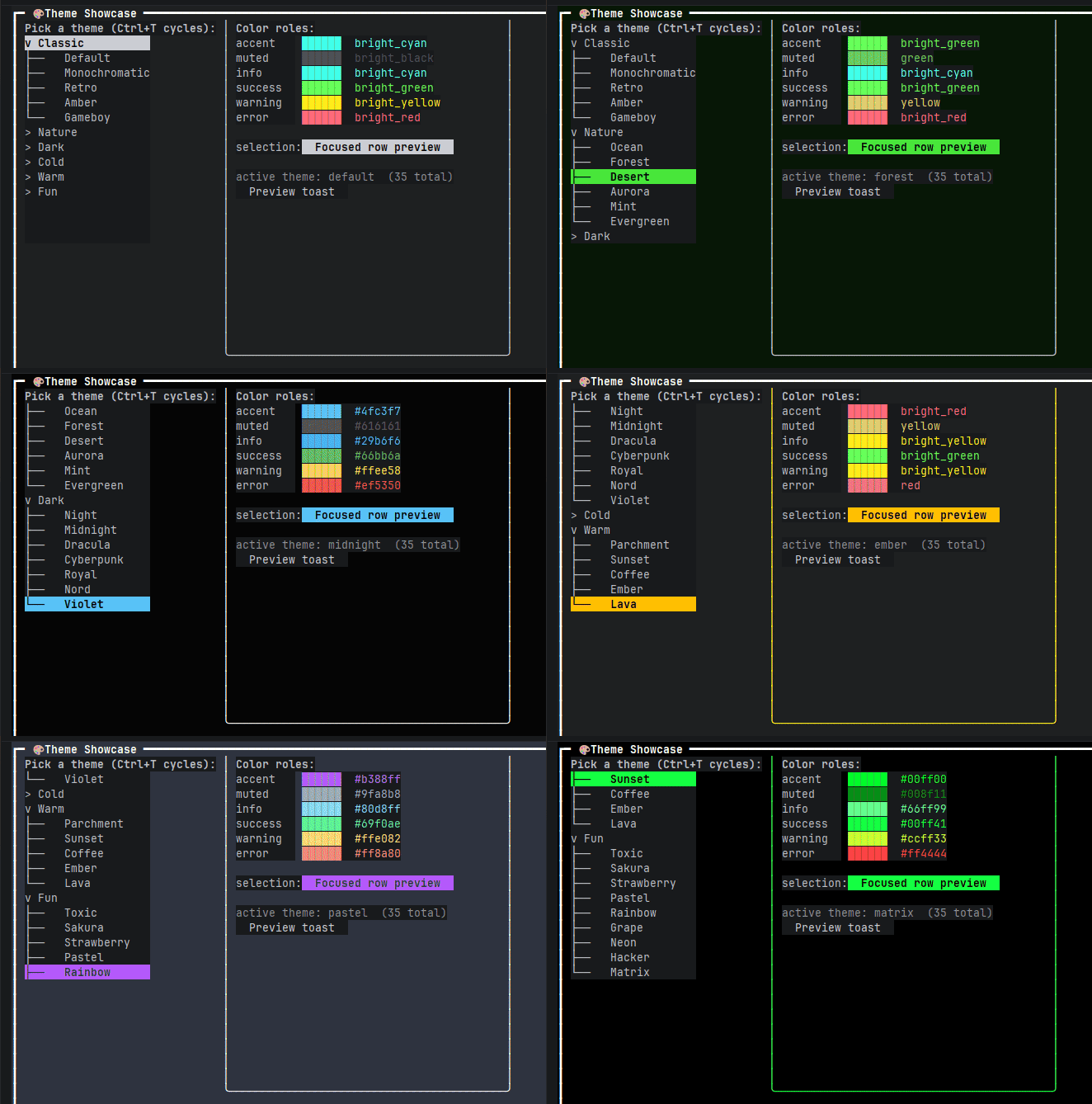
Over 30 built-in themes, switchable at runtime — set_theme(...) re-colors a running app, and Ctrl+T opens a searchable picker.
Changes are tracked in CHANGELOG.md.
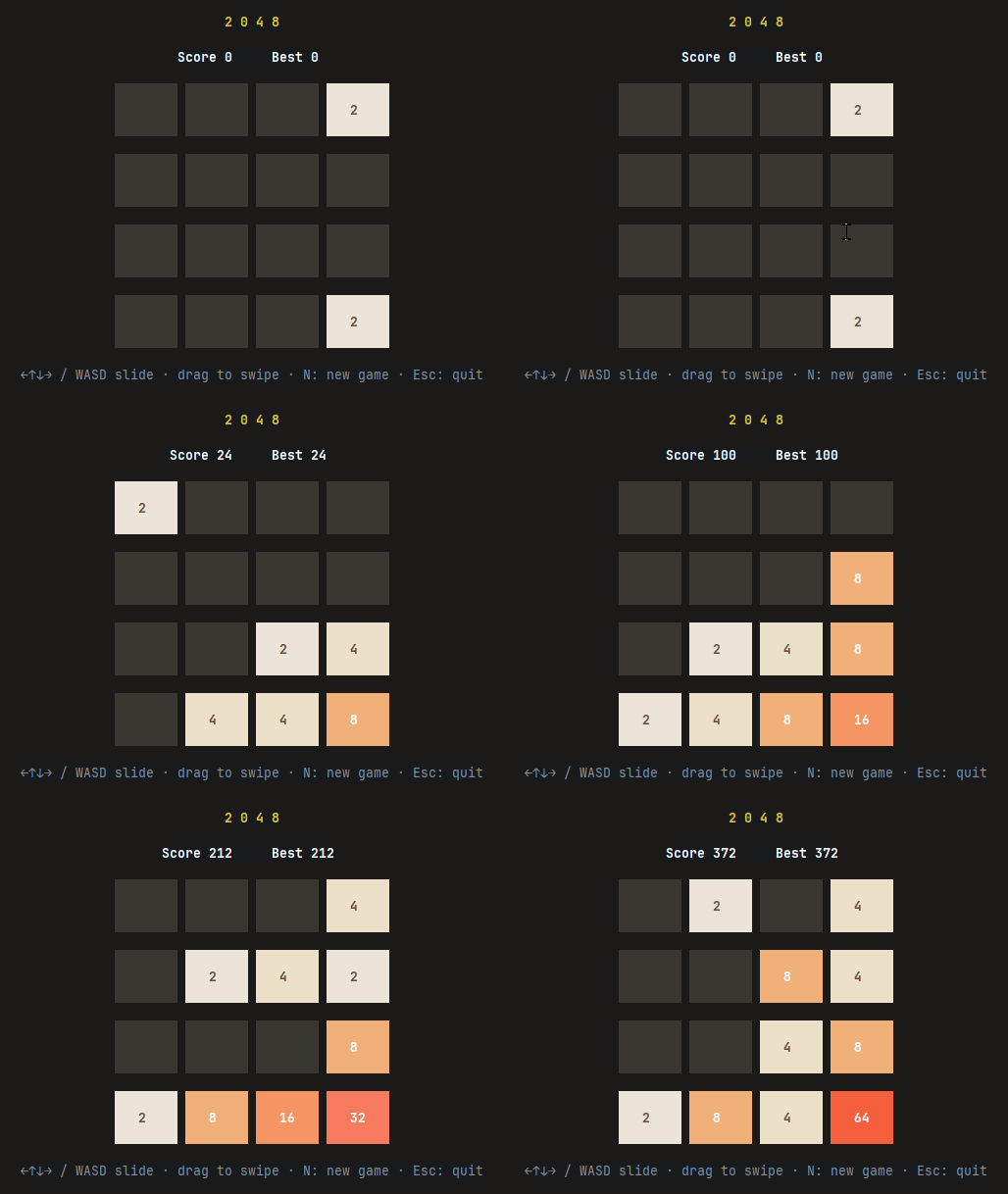
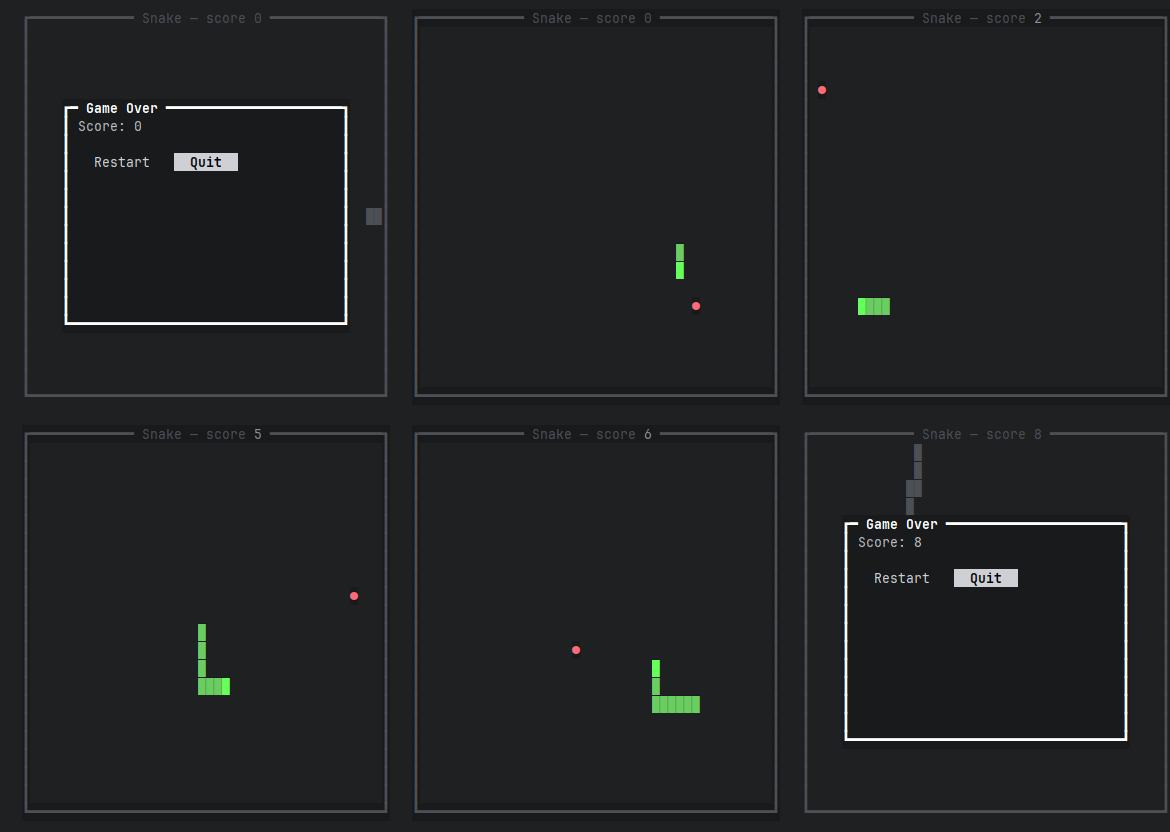
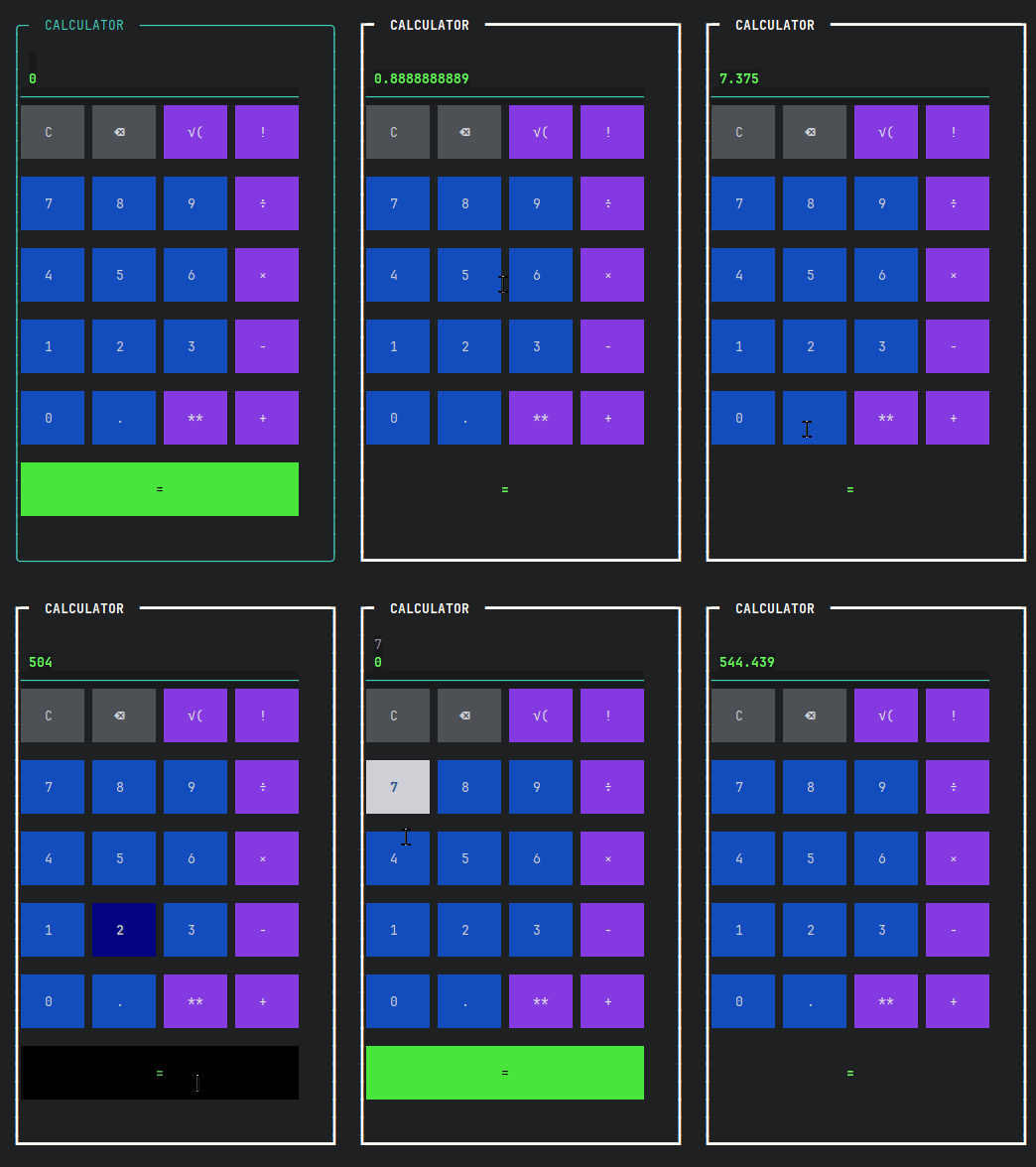
Every one of these is a runnable example in examples/ — and each doubles as a stress test for a different part of the library.
|
|
|
| 2048 — truecolor tiles that auto-downgrade on 16/256-color terminals, arrow keys or a mouse drag to swipe, and a modal overlay for win/lose. | Snake — a custom widget painting the field cell-by-cell, driven by app.tick_interval so game logic is decoupled from the render rate. |
Calculator — a VBox/HBox keypad of multi-row buttons, driveable entirely from the keyboard. |
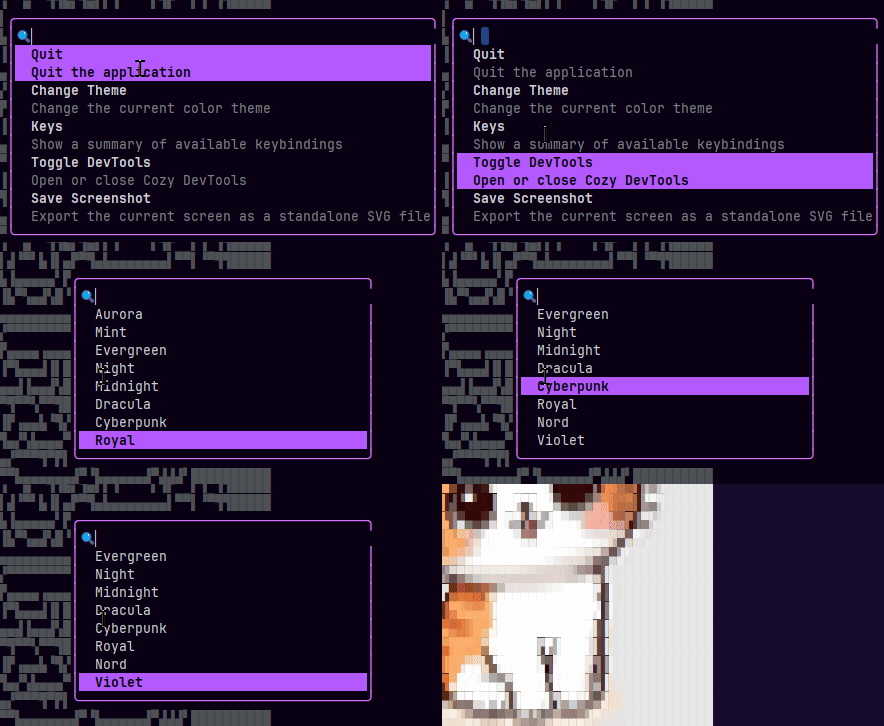
Command palette — Ctrl+P fuzzy-searches every registered command. Quit, Change Theme, and Keys are built in; add your own with app.register_command(...).
Full documentation lives in docs/ (GitHub) directory:
- Core Concepts — the render loop, coordinate system, and widget lifecycle.
- Widgets — every widget:
App,Box,Label,Hyperlink,Bindings,Rule,Code,CodeInput,Diff,Text,Markdown,MarkdownInput,Input,Button,Checkbox,Slider,DropFilesArea,SearchBar,ListView,CheckList,RadioSet,RightClickMenu,MenuBar,Dropdown,ProgressBar,Spinner,Sparkline,BarChart,Calendar,Image,Toast,Tooltip,Table,Tabs,ScrollView,Log,Splitter,Collapsible,Tree,AnimatedLabel,TracebackView. - Layouts, Dock & Overlays —
VBox/HBox/Grid,app.dock(...), and the overlay/modal layer (open_overlay,app.prompt,app.confirm,app.pick_file). - Styling —
Style, colors, text attributes, andThemes. - Input & Interaction — key bindings, mouse support, focus, scrolling, and the Ctrl+P command palette.
- Testing —
cozy_tui.testing.Harness: drive an app headlessly, with virtual time. - Examples — runnable demos in
examples/.
- Cross-platform — runs on Windows (Console API) and POSIX (Linux/macOS via
termios); the backend is chosen automatically. - Very few dependencies — the clipboard is built in (no
pyperclip); the only third-party dependency isrich, used to renderMarkdown/MarkdownInputand to syntax-highlightTracebackView/show_traceback. Everything else is the standard library. - Built-in clipboard —
cozy_tui.clipboard.copy/pastewith native backends per platform (Win32 API,pbcopy/pbpaste,wl-clipboard/xclip/xsel, or OSC 52 fallback). - Unicode-aware rendering — a built-in
wcwidth-style width layer keeps CJK/emoji (double-width) and combining marks (zero-width) aligned in the cell grid. - Widgets:
Button,Checkbox,Input,Slider,Label,Hyperlink,Bindings,Rule,AnimatedLabel,Code,CodeInput,Diff,Text,Box,Markdown,MarkdownInput,DropFilesArea,SearchBar,ListView,CheckList,RadioSet,RightClickMenu,MenuBar,Dropdown,ProgressBar,Spinner,Sparkline,BarChart,Calendar,Image,Toast,Tooltip,Table,Tabs,ScrollView,Log,Splitter,Collapsible,Tree,TracebackView - Testing harness:
cozy_tui.testing.Harnessdrives your app headlessly —ui.click(button),ui.type("hello"),assert "Saved!" in ui— with virtual time (ui.advance(30)fires a 30-second timer instantly, nothing sleeps) and no escape sequences in your test output; see testing.md - Reactive state:
State("Downloads")is an observable value — pass it as a widget'stext/title/progressand the widget follows everystate.value = ..., with one state free to drive as many widgets as you like. Explicit by design (a plainstris never reactive) and one-way; see concepts.md - Themes: a
Themebundles the accent/muted/semantic/selection colors most widgets andapp.toast(...)draw from; switch withset_theme(theme)/theme.activate(), or interactively via the Ctrl+T searchable picker (over 30 built-in presets inTheme.MODES) — see styling.md - Command palette: Ctrl+P opens a Textual-style searchable list of commands (
app.register_command(...)to add your own) — Quit, Change Theme, and Keys (a live keybindings legend) are built in - Crash screens: unhandled exceptions in
app.run()automatically show a full-screen, scrollable, syntax-highlightedTracebackViewwith one-key clipboard copy (App(catch_errors=False)to get a plain propagating exception instead); callcozy_tui.crash_screen.show_traceback(exc)directly to get the same screen outside ofrun() - Context menus:
RightClickMenuwith icons, shortcut labels, and submenus — pop it up fromapp.on_right_click(...);MenuBardocks the same building blocks to the top of the screen as a File/Edit-style menu bar - Layouts:
VBox,HBox,Grid— auto-position children without manual x/y, withflex=to grow docked children into leftover space;Splitterfor a user-resizable two-pane divider - Dock layout:
app.dock(widget, "top"/"bottom"/"left"/"right"/"fill")— edge-anchored regions that re-flow on resize - Overlays & modals:
app.open_overlay(widget)floats a widget above the UI, dims the background, and confines focus/input — the basis for dialogs (app.prompt,app.confirm,app.pick_file), menus, and tooltips (app.set_tooltip) - Input validation:
Input(inp_type="number")filters keystrokes to valid numbers as you type;required=/validator=plus.error/.is_validfor anything else, with automatic error-color styling - Multi-line Input: Enter or Shift+Enter to insert newlines, UP/DOWN to navigate lines
- Markdown preview:
MarkdownInputrenders live Rich Markdown when unfocused - Focus system: Tab / Shift+Tab to cycle focus, click to focus with mouse
- Cursor blinking: Uses the real terminal cursor — smooth blink with no character replacement
- Mouse support: Click to focus widgets, click to activate buttons, scroll wheel to scroll
- Scrolling: Long content scrolls vertically; single-line inputs scroll horizontally
- Global key handlers: Register app-wide shortcuts with
app.on_key() - Flexible styling: Per-widget foreground, background, and text styles (bold, dim, underline)
- Python 3.10+
- A VT-capable terminal on Windows (Windows Console API) or POSIX (Linux/macOS, via
termios/tty). The console backend is selected automatically at import.
pip install cozy-tuiThat's it — rich (used to render Markdown/MarkdownInput and to syntax-highlight TracebackView) is pulled in automatically.
Take it for a spin with the built-in demo:
cozy-tui # or: python -m cozy_tuiInstalling the package also provides a cozy-tui command (equivalently python -m cozy_tui):
cozy-tui              # launch the interactive demo (no subcommand)
cozy-tui demo         # launch the interactive demo
cozy-tui --version    # print the installed version
cozy-tui doctor       # check Python, imports, clipboard backend, color depth, PyPI version
cozy-tui doctor --offline   # skip the PyPI check
cozy-tui info         # version + detected terminal capabilities
cozy-tui run script.py           # run a script, like `python script.py`
cozy-tui run --debug script.py   # ...with App(debug=True) on, no code change needed
Then in your script:
from cozy_tui import App, Style
from cozy_tui.widgets import Box, Label, Input, Buttongit clone https://github.com/youssefahmed2017/cozy_tui.git
cd cozy_tui
pip install -e . # add [dev] for the test suite (pytest)from cozy_tui import App, Style
from cozy_tui.widgets import Box, Label, Input, Button, Checkbox
from cozy_tui.events import Key
app = App(full=True, size=None, style=Style(fg="white", bg="black"))
# Box size = virtual pixels ÷ App.SCALE (10) → "600x140" = 60 cols × 14 rows
box = Box(2, 1, "600x140", border="rounded", style=Style(fg="white", bg="black"), title="Sign Up")
box.add(Label(2, 2, "Username:"))
box.add(Input(12, 2, 20, placeholder="Enter username"))
box.add(Label(2, 4, "Bio:"))
box.add(Input(12, 4, 20, placeholder="Tell us about you", multiline=True))
box.add(Checkbox(2, 7, "Subscribe to newsletter"))
box.add(Checkbox(2, 9, "I agree to the terms", checked=True))
btn = Button(2, 11, "Submit", width=20, style=Style(fg="white", bg="blue"))
btn.on_click(lambda b: print("Submitted!"))
box.add(btn)
app.add(box)
app.focus(btn)
app.on_key(Key.ESC, lambda: "quit")
app.run()