ja plugin dev components page
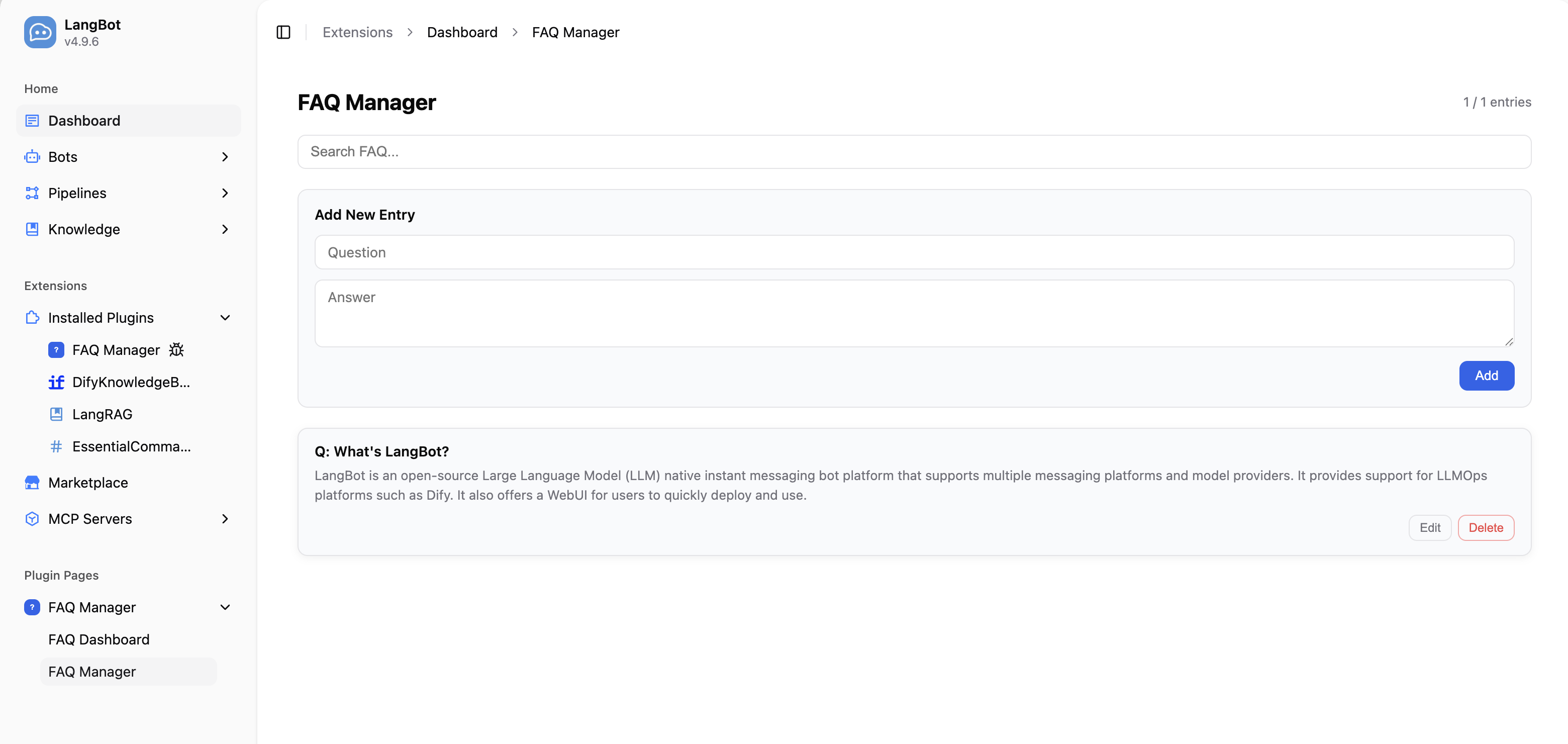
Pageコンポーネントを使用すると、プラグインはLangBot WebUIのサイドバーにカスタムビジュアルページを登録できます。ページはiframeサンドボックス内で実行され、Page SDKを介してホストと通信し、プラグインのバックエンドAPIを呼び出すことができます。
- 管理パネル:プラグインに視覚的な設定やデータ管理インターフェースを提供(例:FAQ管理、分析ダッシュボード)
- データ表示:ランタイムの統計データ、ログ、チャートなどを表示
- インタラクティブツール:フォーム、エディタなどの対話式インターフェースを提供
プラグインディレクトリでコマンドを実行します:
lbp comp Pageページ名を入力すると、components/pages/ディレクトリにページファイルが生成されます:
├── components
│   └── pages
│       └── dashboard
│           ├── dashboard.yaml   # ページマニフェスト
│           ├── dashboard.py     # バックエンドハンドラー
│           ├── index.html       # ページエントリポイント
│           └── i18n             # 翻訳ファイル(オプション)
│               ├── en_US.json
│ └── ja_JP.jsonmanifest.yamlにもコンポーネント検出設定が追加されます:
spec:
  components:
    Page:
      fromDirs:
      - path: components/pages/
maxDepth: 2apiVersion: v1 # 変更しないでください
kind: Page # 変更しないでください
metadata:
name: dashboard # プラグイン内で一意のページID
label:
en_US: Dashboard # WebUIサイドバーに表示される名前、多言語対応
ja_JP: ダッシュボード
spec:
path: index.html # HTMLエントリファイル(このYAMLファイルからの相対パス)
execution:
python:
path: dashboard.py # バックエンドハンドラーファイル
attr: DashboardPage # ハンドラークラス名PageコンポーネントのバックエンドハンドラーはPage基底クラスを継承し、handle_apiメソッドを実装してフロントエンドページからのAPIリクエストを処理します。
from langbot_plugin.api.definition.components.page import Page, PageRequest, PageResponse

class DashboardPage(Page):

    async def handle_api(self, request: PageRequest) -> PageResponse:
        # request.endpoint: APIエンドポイントパス(例:'/stats')
        # request.method:   HTTPメソッド(GET、POST、PUT、DELETE)
        # request.body:     リクエストボディ(解析済みJSON、またはNone)

        if request.endpoint == '/stats' and request.method == 'GET':
            # self.pluginでプラグインインスタンスの共有状態にアクセス
            return PageResponse.ok({
                'total': len(self.plugin.entries),
            })

return PageResponse.fail(f'不明なエンドポイント: {request.endpoint}')| フィールド | 型 | 説明 |
|---|---|---|
endpoint |
str |
APIエンドポイントパス(例:'/entries') |
method |
str |
HTTPメソッド(GET、POST、PUT、DELETE) |
body |
Any |
リクエストボディ(解析済みJSON、またはNone) |
| メソッド | 説明 |
|---|---|
PageResponse.ok(data) |
成功レスポンス。dataはJSON変換可能な任意の値 |
PageResponse.fail(error) |
エラーレスポンス。errorはエラーメッセージ文字列 |
HTMLファイルにPage SDKを読み込んで、プラグインバックエンドと通信します:
<!DOCTYPE html>
<html>
<head>
  <meta charset="UTF-8">
  <style>
    body {
      background: var(--langbot-bg, #ffffff);
      color: var(--langbot-text, #0a0a0a);
      font-family: -apple-system, BlinkMacSystemFont, 'Segoe UI', Roboto, sans-serif;
      padding: 24px;
    }
  </style>
</head>
<body>
  <h1 data-i18n="title">ダッシュボード</h1>
  <p id="stats"></p>

  <script src="/api/v1/plugins/_sdk/page-sdk.js"></script>
  <script>
    langbot.onReady(async function(ctx) {
      // バックエンドAPIを呼び出す
      var data = await langbot.api('/stats', null, 'GET');
      document.getElementById('stats').textContent = '合計: ' + data.total;
    });
  </script>
</body>
</html>| メソッド | 説明 |
|---|---|
langbot.onReady(callback) |
SDK準備完了時に呼ばれる。callbackはctx(themeとlanguageを含む)を受け取る |
langbot.api(endpoint, body?, method?) |
プラグインのhandle_apiを呼び出す。Promiseを返す |
langbot.t(key, fallback?) |
翻訳文字列を取得 |
langbot.onThemeChange(callback) |
テーマ変更時のコールバック |
langbot.onLanguageChange(callback) |
言語変更時のコールバック |
langbot.applyI18n() |
data-i18n翻訳を手動で再適用 |
SDKはページにCSSカスタムプロパティを自動設定します。直接使用できます:
| CSS変数 | 用途 |
|---|---|
--langbot-bg |
ページ背景色 |
--langbot-bg-card |
カード背景色 |
--langbot-text |
メインテキスト色 |
--langbot-text-muted |
サブテキスト色 |
--langbot-border |
ボーダー色 |
--langbot-accent |
アクセント色 |
ページディレクトリ内にi18n/ディレクトリを作成し、JSON翻訳ファイルを配置します:
pages/dashboard/
├── index.html
└── i18n/
    ├── en_US.json
    └── ja_JP.json
翻訳ファイルはフラットなJSONキーバリューペアです:
{
  "title": "ダッシュボード",
  "totalEntries": "エントリ数"
}HTML要素にdata-i18n属性を追加すると、SDKが自動的にテキストを翻訳します:
<h1 data-i18n="title">Dashboard</h1>FAQエントリのCRUD操作を実装した完全なPageコンポーネントの例です。
バックエンドハンドラー(components/pages/manager/manager.py):
from langbot_plugin.api.definition.components.page import Page, PageRequest, PageResponse

class ManagerPage(Page):

    async def handle_api(self, request: PageRequest) -> PageResponse:
        plugin = self.plugin

        if request.endpoint == '/entries' and request.method == 'GET':
            return PageResponse.ok({'entries': plugin.entries})

        if request.endpoint == '/entries' and request.method == 'POST':
            question = (request.body or {}).get('question', '').strip()
            answer = (request.body or {}).get('answer', '').strip()
            if not question or not answer:
                return PageResponse.fail('質問と回答は必須です')
            entry = plugin.add_entry(question, answer)
            await plugin.persist()
            return PageResponse.ok({'entry': entry})

        if request.endpoint == '/entries' and request.method == 'DELETE':
            entry_id = (request.body or {}).get('id', '')
            if plugin.delete_entry(entry_id):
                await plugin.persist()
                return PageResponse.ok({'deleted': entry_id})
            return PageResponse.fail('エントリが見つかりません')

return PageResponse.fail(f'不明: {request.method} {request.endpoint}')フロントエンドページ(components/pages/manager/index.html)ではlangbot.api()でバックエンドを呼び出します:
// エントリを読み込む
var data = await langbot.api('/entries', null, 'GET');

// エントリを追加
await langbot.api('/entries', { question: '...', answer: '...' }, 'POST');

// エントリを削除
await langbot.api('/entries', { id: '...' }, 'DELETE');完全なサンプルコードはFAQManagerプラグインを参照してください。
- ページは
sandbox="allow-scripts allow-forms"のiframe内で実行され、ポップアップを開いたり親ページをナビゲートすることはできません -
self.pluginでプラグインインスタンスの共有状態にアクセスできます — PageとToolコンポーネントはデータを共有できます -
PageResponse.ok()とPageResponse.fail()を使用してレスポンスを構築し、一貫したフォーマットを確保してください - Page SDKの
<script>タグは、langbotオブジェクトを使用するコードの前に配置する必要があります